A Time-Honoured Craft Behind the Scenes
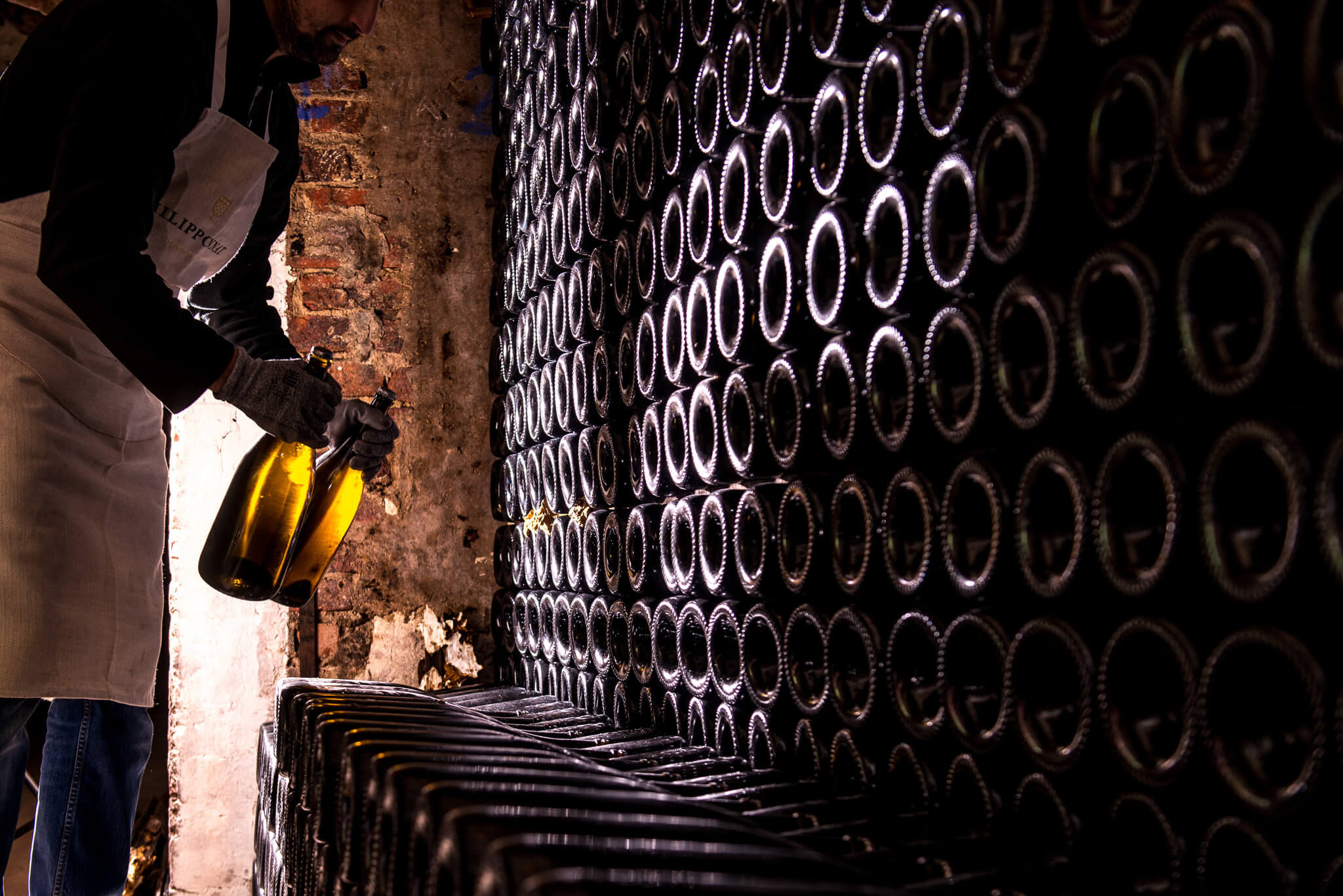
In the silence and darkness of the House’s cellars, certain bottles remain undisturbed for almost a decade. Yet before reaching this state of perfect stillness, they pass through the hands of our cellar teams, who carry out a precise, centuries-old technique known as entreillage.
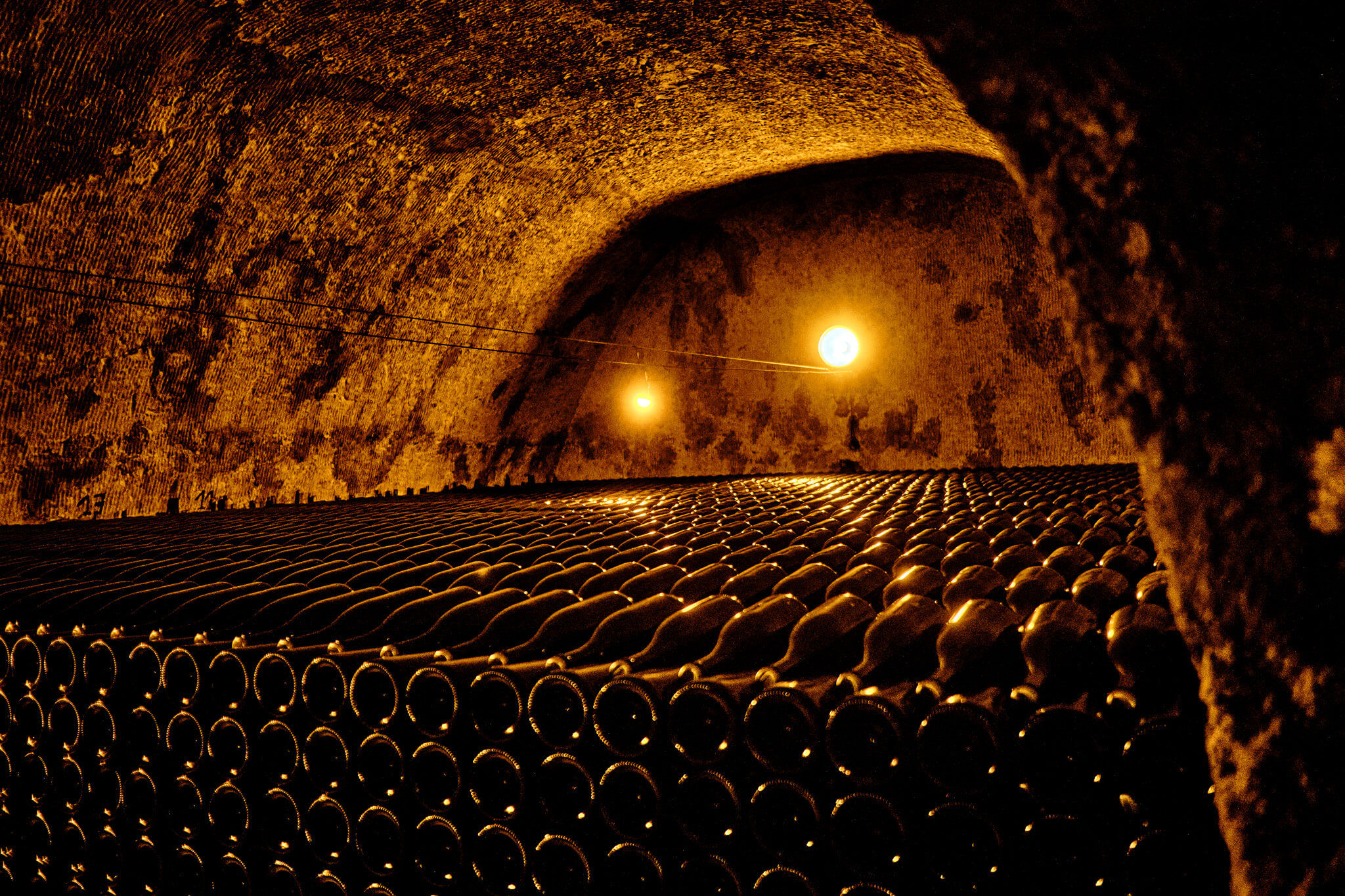
Entreillage is the traditional art of carefully stacking Champagne bottles in preparation for their long ageing on the lees. Laid horizontally, the bottles are arranged in alternating layers to form large, perfectly ordered stacks. Every three or four rows, small wooden slats are placed beneath the necks to balance the structure and ensure its stability.
The technique may appear simple, yet it requires genuine expertise. A poorly constructed stack can become unstable. The weight, alignment and regularity of each row are essential. Success depends on finding the right rhythm and repeating each movement with absolute precision.
At Philipponnat, this work is generally carried out by two people. Each bottle weighs almost 1.5 kg, and the bottles are handled in pairs, meaning 3 kg are moved with every gesture. Once a steady rhythm has been established, around thirty bottles can be stacked in a single minute. It is a rapid, precise and physically demanding task, repeated hundreds of times.
Once carefully stacked, the bottles begin another transformation, this time invisible to the eye. Prolonged contact between the wine and the yeasts plays an essential role in the development of Champagne’s aromas. As ageing progresses, the yeast cells gradually break down, releasing compounds that enrich the wine’s texture and aromatic complexity. Creamy sensations begin to emerge, accompanied by notes of brioche, fresh bread and eventually toast, all contributing to the richness of Champagnes that have spent many years ageing on the lees.
At Philipponnat, non-vintage cuvées generally spend three to four years ageing on the lees, while vintage Champagnes remain for six to seven years. Clos des Goisses and certain single-vineyard cuvées may spend as long as nine or ten years resting in their carefully constructed stacks.
This extended ageing does more than develop aromas. As long as the bottles remain undisgorged and are kept neck-down, the yeasts also help protect the wine from premature oxidation. The Champagnes can therefore gradually gain depth and complexity while preserving their freshness.
Then comes the moment to patiently dismantle what was so carefully built several years earlier. The bottles are handled once again, one by one, or rather two by two, before moving on to the next stages of their production: riddling, disgorgement, post-disgorgement ageing, labelling and finally dispatch.
Throughout its time in the cellars, a single bottle will have been handled on numerous occasions. Behind the patience required to create a great Champagne lies a very tangible reality: the dedication of the women and men who preserve these precise, physically demanding and artisanal skills.
Entreillage is one of those traditions that rarely comes to mind once the wine is poured into the glass. Yet for many years, it provides the bottles with the time and conditions they need to develop their full character.